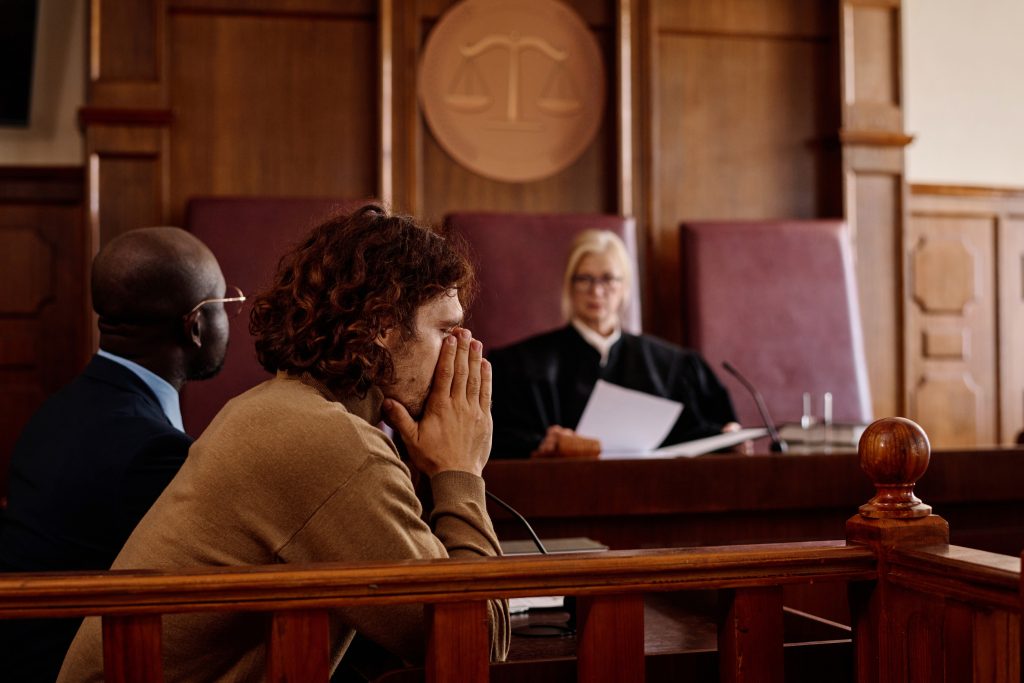
Bail is a fundamental right in many legal systems, allowing those accused of crimes to be released from jail pending their trial. The goal of bail is to ensure that the accused returns to court for their trial without unnecessarily punishing them before they are proven guilty.
However, in certain cases, a judge may deny bail or set it at an unaffordable amount. This decision is typically made based on various legal criteria that aim to protect public safety, ensure the defendant’s appearance at trial, and uphold the integrity of the judicial process. (Read our guide to what mistakes to avoid during an arrest.)
Here are several common reasons why bail can be denied:
Risk of Flight (Fleeing the Jurisdiction)
One of the primary reasons a judge may deny bail is if there is a significant risk that the defendant will flee the jurisdiction to avoid prosecution. This is particularly true for the defendants facing serious charges, those who have a history of flight, or those with strong ties to another country. Factors like foreign citizenship, a history of traveling or living abroad, or a lack of community ties can all increase the perceived risk of flight. If the defendant is considered likely to escape the legal process, the judge may opt to deny bail entirely or impose strict conditions.
Seriousness of the Offense
The severity of the charges against the defendant is another critical factor. For those accused of serious or violent crimes, such as murder, rape, or armed robbery, there may be a presumption that they pose a significant threat to public safety.
In these cases, the judge may feel that releasing the defendant on bail would endanger the community or undermine the integrity of the judicial system. Bail may be denied to prevent further harm or to ensure the defendant remains in custody while awaiting trial.
Risk to Public Safety
In addition to the nature of the crime, the judge may assess whether the defendant poses an ongoing threat to public safety. For example, if the defendant has a history of violent behavior, is accused of committing violence in the past, or has made threats during the investigation or arrest, a judge might deny bail to prevent further harm.
This is especially common in cases involving domestic violence, drug trafficking, or gang-related activities, where the defendant may be seen as a danger to specific individuals or the community at large.
Prior Criminal Record
A person’s past legal record plays a major role in how a judge decides on bail. Prior convictions, especially for similar or serious offenses, can raise concerns about the risk of repeat behavior. Judges also look at whether the individual has followed court requirements in the past, such as complying with probation, parole, or previous bail terms.
If there is a pattern of noncompliance or ongoing criminal activity, the court may determine that the defendant is unlikely to follow future obligations, which can result in bail being denied.
Failure to Appear in Previous Cases
A defendant who has previously failed to appear in court for scheduled hearings or trials may be denied bail in subsequent cases. Failing to appear is often considered a violation of trust between the defendant and the court.
If there is a history of skipping court dates or not following the terms of a previous bail agreement, the court may decide that the defendant is not trustworthy enough to be released.
Public Outcry or High-Profile Cases
In some high-profile cases, especially those involving significant public attention, there may be a greater likelihood of bail being denied. Public pressure or outcry regarding the seriousness of the charges or the perceived danger posed by the defendant can sometimes influence a judge’s decision.
In such cases, judges may err on the side of caution, especially if there is a concern that granting bail could lead to public unrest or further harm.
Pending Investigations or Multiple Charges
When a defendant is facing multiple charges, particularly in complex cases involving organized crime or widespread criminal activity, the judge may decide that releasing the defendant could interfere with ongoing investigations. Additionally, if the defendant is believed to be involved in multiple criminal activities or conspiracies, the risk of further crimes being committed while out on bail can be a deciding factor in denying release.
Inability to Meet Bail Conditions
Even when bail is set, a defendant can still be denied release if they are unable to meet the conditions set by the court. For example, the court may require the defendant to pay a certain amount of money, wear an ankle bracelet, or adhere to curfews or travel restrictions.
If the defendant cannot meet these financial or logistical requirements, they may remain in custody until their trial. In cases where bail is set high to ensure the defendant’s appearance at trial, the inability to post bail can effectively act as a denial of release.
Mental Health and Addiction Issues
Defendants suffering from severe mental health issues or substance addiction may also face bail denial, especially if their condition makes them a danger to themselves or others.
In cases where the defendant is considered to be a flight risk due to impaired judgment or an inability to comply with bail conditions due to addiction or untreated mental illness, a judge may decide that the risks outweigh the benefits of release. In some cases, the court may require the defendant to undergo a mental health or addiction assessment to determine whether they are fit to be released.
Probation or Parole Violations
When someone is already under probation or parole and then faces a new arrest, that situation can work against them in a bail decision.
Being charged with another offense while under supervision may be seen as a breach of prior conditions. As a result, a judge may question the individual’s reliability and determine that releasing them again could lead to additional violations, which can lead to bail being denied.
The Bottom Line
The decision to grant or deny bail is a complex process that considers various factors, including the severity of the crime, the defendant’s criminal history, and the risks they pose to public safety or the judicial process. Judges have a duty to balance the rights of the accused with the need to protect society and ensure that justice is served.
While the presumption of innocence is a cornerstone of the legal system, bail can be denied when there are legitimate concerns about flight, public safety, or the integrity of the trial process. Understanding these factors helps clarify the circumstances under which bail may not be granted and highlights the role of the courts in maintaining a fair and orderly justice system.
About Affordabail
Affordabail operates as a bail bond company serving communities across Louisiana, with multiple offices throughout the state. We assist clients with bail needs at a range of parish facilities, including those located in Covington, Livingston, Gretna, Amite, Laplace, and surrounding areas.
With over 20 years of experience, we have helped individuals and families secure release quickly and efficiently. Our team is available 24 hours a day, providing dependable support whenever it’s needed. We treat every client with dignity and understanding, recognizing that each situation is unique and guided by the belief in “innocent until proven guilty.”
All payments are handled securely, and our team works efficiently to complete the necessary paperwork without delay. Our goal is to minimize the time your loved ones spend in custody while making the process as straightforward and stress-free as possible. With experienced guidance at every step, we’re here to help you navigate the bail process with confidence.
We offer payment plans, too. For more details on the types of bail bonds we offer, and to get started, call any of our locations, or fill out an online form.